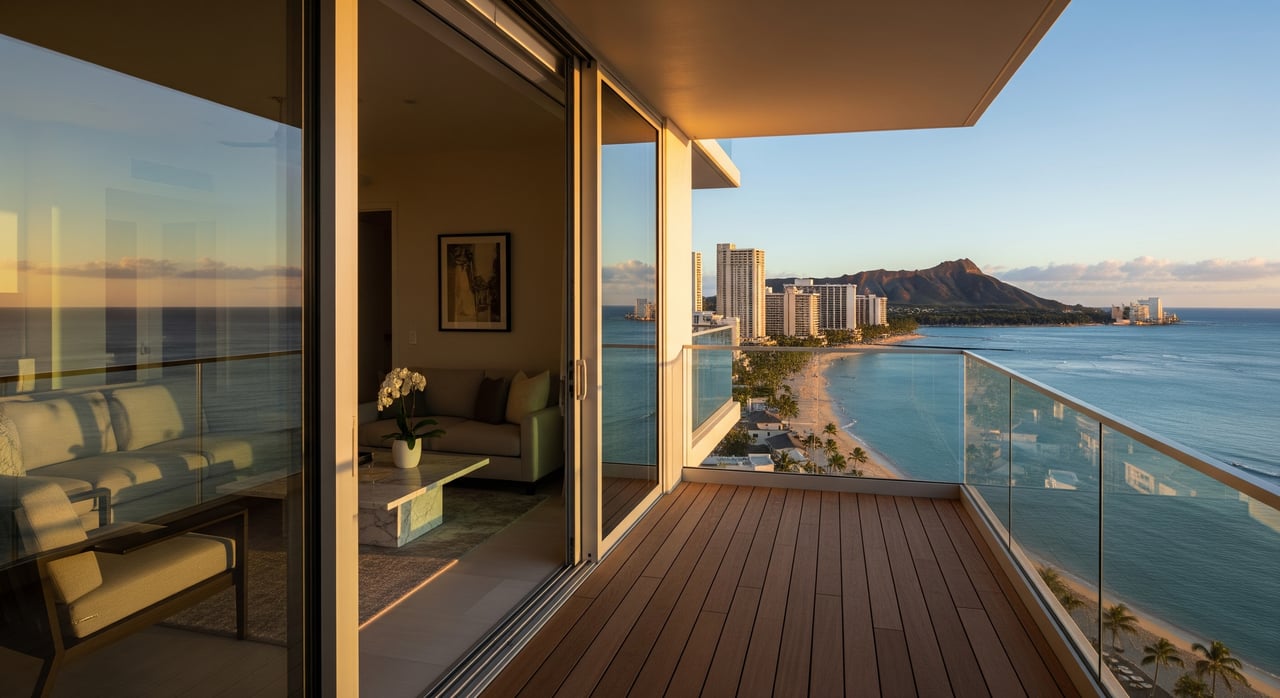
Leasehold vs. Fee Simple in Waikiki Condos
November 21, 2025
November 21, 2025
Thinking about a Waikiki condo but stuck on leasehold versus fee simple? You are not alone. Ownership types in Honolulu can be confusing, and the wrong choice can affect your financing, monthly costs, and your exit plan. In this guide, you will learn what each option means, how it plays out in Waikiki, and a clear process to evaluate a specific building before you write an offer. Let’s dive in.
Fee simple means you own your condo unit and a share of the land under the building through the condominium property regime. Your ownership does not have a set end date, and your rights continue indefinitely, subject to recorded documents like CC&Rs, association rules, and zoning.
For most buyers and lenders, fee simple is the simplest path. There is no separate ground lease, no ground rent, and fewer moving parts when you refinance or resell.
Leasehold condos are built on land owned by someone else. You own the condo interest for the term of a recorded ground lease. When the lease expires, the land usually reverts to the landowner unless the lease is renewed or the fee interest is purchased.
Key elements that shape your risk and cost:
Waikiki’s mid‑20th‑century resort boom created many high‑rises on leased land. Developers sold condo units while families, trusts, religious or charitable organizations, or government entities kept the land. The identity of the landowner matters because it affects how renewal talks may go and how predictable lease history might be.
Leasehold condos often list for less than fee simple units because you are not buying the land. That lower entry price can be attractive. However, you need to model the total cost of ownership, including ground rent and scheduled increases. Escalations reduce cash flow for investors and raise carrying costs for owner‑occupants.
Lenders look closely at the remaining lease term and other lease provisions. Different loan programs set different minimums for unexpired lease terms, and practical thresholds often fall in the 30 to 50-plus year range. The exact requirement depends on the lender and the program, so confirm early. Some mainland lenders are unfamiliar with Hawaii leaseholds, while local banks and credit unions may be more flexible.
Lease terms that can concern lenders include automatic reversion at expiration, consent requirements, subordination clauses, and renewal options with unclear pricing.
As a lease gets closer to expiration, financing becomes harder, buyer pools shrink, and days on market can rise. Prices often discount to reflect that risk, and more sales go to cash buyers. Extending a ground lease is sometimes possible but can be costly and uncertain. It can also require association‑wide action.
Many Waikiki buildings allow some form of vacation rental, while others do not. Whether you can do short‑term rentals depends on zoning, the building’s rules, and the ground lease. Leasehold status alone does not determine rental ability. Always verify the project’s rental policy and county regulations for your specific building.
Request and study these items with your agent, lender, and a Hawaii‑licensed real estate attorney:
Confirm ownership type. Verify whether the unit is fee simple or leasehold through MLS data, seller disclosure, or a title search.
Get lender pre‑approval. Share the ground lease with your lender to confirm program eligibility and minimum remaining term.
Order a title report and legal review. Have a Hawaii‑licensed real estate attorney review the lease and condo documents.
Analyze the association. Review financials, reserve study, minutes, and any history of lease negotiations.
Verify consents and timing. Obtain estoppel letters and confirm if the lessor must approve the sale or loan, including fees and timelines.
Model total cost of ownership. Project ground rent escalations and potential renewal costs using a 5 to 10 year outlook. Stress‑test worst‑case scenarios.
Compare sales comps. Look at recent leasehold and fee‑simple sales in the same building and nearby towers to quantify pricing and marketability differences.
Plan for expiration risk. If the lease will expire during your ownership horizon, ask the association about feasibility and cost to extend or buy the fee interest.
Look for these items in the recorded ground lease:
You deserve clear answers, a strong process, and a smooth closing. Andrew provides hands‑on guidance across Waikiki’s condo towers, from document collection and lender coordination to contract strategy and escrow management. You get a process‑driven advisor who understands leasehold nuances, monitors timelines, and communicates proactively so there are no surprises.
Ready to compare specific buildings and run the numbers? Schedule your free consultation with Andrew Leitheiser.
Stay up to date on the latest real estate trends.


Real Estate
Affordable Smart Upgrades to Reduce Energy Costs at Home
From first viewings to final closings, I’m by your side to ensure every step is clear, enjoyable, and tailored just for you. Let’s team up and make your next move in Honolulu an absolute breeze.